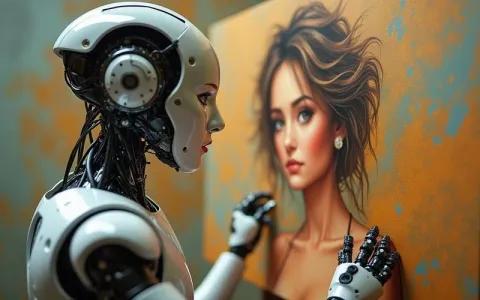



Good morning, distinguished guests, faculty members, and fellow students. As we stand at the precipice of the fourth industrial revolution, artificial intelligence has emerged as one of the most transformative technologies of our time. AI systems can now recognize speech, translate languages, diagnose diseases, and even create art
capabilities once thought to be exclusively human domains. From the algorithms that power our social media feeds to the sophisticated systems controlling global financial markets, artificial intelligence has woven itself into the fabric of modern society.

Core Technologies Driving AI Development
The remarkable capabilities of modern AI systems stem from several groundbreaking technologies:
- Machine Learning: Algorithms that enable computers to learn patterns from data without explicit programming
- Deep Learning: Neural networks with multiple layers that can recognize complex patterns in images, sound, and text
- Natural Language Processing: Technology that allows computers to understand, interpret, and generate human language
- Computer Vision: Systems that can identify and process objects in images and videos
“Artificial intelligence is the new electricity, poised to transform every industry and aspect of human life.
Andrew Ng
Practical Applications Across Industries
The real-world applications of AI are as diverse as they are impactful. In healthcare, AI algorithms can analyze medical images with accuracy surpassing human radiologists. Educational platforms utilize AI to create personalized learning paths for students. Autonomous vehicles combine multiple AI technologies to navigate complex environments safely. Meanwhile, in the business world, AI-powered analytics help organizations make data-driven decisions and optimize operations.
| Sector | Application | Impact |
|---|---|---|
| Healthcare | Medical imaging analysis | Faster, more accurate diagnoses |
| Education | Adaptive learning systems | Personalized education paths |
| Transportation | Autonomous vehicles | Improved safety and efficiency |
| Finance | Fraud detection | Enhanced security |
| Retail | Recommendation engines | Improved customer experience |
Benefits and Challenges of AI Integration
The integration of AI brings significant advantages including increased efficiency, reduced human error, and the ability to process vast amounts of data. However, these benefits come with important challenges that require careful consideration. Privacy concerns regarding data collection, potential job displacement in certain sectors, algorithmic bias, and the ethical implications of autonomous decision-making all demand thoughtful solutions and regulatory frameworks.
The Future Trajectory of Artificial Intelligence
Looking forward, we can anticipate several exciting developments in AI technology. Artificial General Intelligence (AGI)
systems with human-like reasoning capabilities
remains the ultimate goal for many researchers. The integration of AI with other emerging technologies like quantum computing promises to unlock even greater potential. Meanwhile, explainable AI aims to make these complex systems more transparent and understandable to human users.
Conclusion: Embracing Our AI Future
As artificial intelligence continues to evolve at an unprecedented pace, our responsibility is to guide its development in ways that benefit humanity as a whole. The future of AI isn’t just about technological advancement
it’s about how we choose to implement these powerful tools to address global challenges, enhance human capabilities, and create a more equitable world. By fostering interdisciplinary collaboration between technologists, ethicists, policymakers, and the general public, we can ensure that artificial intelligence serves as a force for positive transformation in our society.
内容均以整理官方公开资料,价格可能随活动调整,请以购买页面显示为准,如涉侵权,请联系客服处理。
本文由星速云发布。发布者:星速云。禁止采集与转载行为,违者必究。出处:https://www.67wa.com/132070.html